
In the modern pursuit of health and wellness, fitness enthusiasts often fall into the trap of equating suffering with success. We are conditioned to believe that if a workout doesn’t leave our knees throbbing, our ankles aching, or our joints screaming under heavy impact, it wasn’t effective.
This introduces what exercise scientists call the “Longevity Paradox.” Pushing your body to its absolute limits through high-impact, repetitive pounding can yield impressive short-term athletic gains, but it frequently comes at the steep cost of premature cartilage degradation and chronic joint pain later in life. The ultimate goal of a lifelong fitness journey is not to burn out in a decade; it is to find the “Goldilocks Zone” of exercise—where high cardiovascular intensity meets uncompromising joint preservation.
The Science of Joint Preservation
To understand how to protect your body while maximizing health, we must look at how physical structures adapt to stress.
Weight-Bearing vs. Non-Weight-Bearing Dynamics
Joints are marvels of biological engineering, but cartilage lacks a direct blood supply. It receives vital nutrients through the compression and decompression cycles of movement, much like a sponge absorbing and releasing liquid. However, excessive shear force and repetitive micro-trauma—such as the shock waves experienced by running on hard asphalt—gradually break down collagen fibers faster than the body can repair them.
The Role of Muscle Armor
True joint protection is achieved by building robust supporting musculature. Choosing joint-safe sports that engage large muscle groups without delivering jarring blows to the skeletal system allows you to build strength, elevate your heart rate, and protect your structural integrity simultaneously.
Top Sports for Longevity and Joint Health
If your priority is long-term vitality, cardiovascular excellence, and absolute joint safety, five standout activities deserve a permanent place in your routine.
1. Swimming: The Zero-Impact Masterclass
Swimming is widely considered the undisputed champion of sports for longevity. When immersed in water, buoyancy neutralizes the heavy gravitational load on your hips, knees, and spine. Simultaneously, water provides consistent, omnidirectional resistance, engaging your lats, core, shoulders, and legs. It delivers an extraordinary cardiovascular workout that strengthens the heart and lungs while asking virtually nothing in terms of impact from your skeletal system.
2. Cycling: Cardiovascular Power Without Shear Force
Outdoor road cycling or trail riding provides phenomenal aerobic conditioning and lower-body strength. Because your body weight is supported by the saddle, your knees and ankles are spared the heavy ground-reaction forces of running or jumping. Cycling promotes a smooth, cyclical range of motion that strengthens the quadriceps and hamstrings, which in turn act as powerful shock absorbers for your kneecaps.
3. Rowing: The Ultimate Posterior Chain Developer
Whether on the water or using a dynamic rowing machine in the gym, rowing is one of the most efficient full-body exercises available. It targets your entire posterior chain—calves, hamstrings, glutes, lower back, and upper back—building posture and core stability. Because the motion is seated and glides on a smooth track, it avoids impact entirely while delivering a formidable cardiovascular and muscular endurance challenge.
4. Cross-Country Skiing and Elliptical Training
For those seeking the cardiovascular benefits of running without the pounding trauma, cross-country skiing (or its indoor cousin, the elliptical trainer) offers a brilliant biomechanical solution. These activities mimic the fluid stride of running while keeping your feet in constant, unbroken contact with the pedals or snow. This allows for high-intensity low-impact high-intensity training (LIIT) that torches calories while protecting delicate knee cartilage.
5. Controlled Resistance Training
While not a traditional sport, structured resistance training is the ultimate insurance policy for joint protection during exercise. By building hypertrophy in the muscles immediately surrounding vulnerable joints (such as strengthening the rotator cuffs for shoulders or the vastus medialis for knees), you create an internal brace that stabilizes joints against unexpected movements in daily life.
Strategic Integration for a Balanced Routine
Even the best individual sport can lead to overuse issues if performed exclusively day after day. Building a bulletproof body requires a diversified approach.
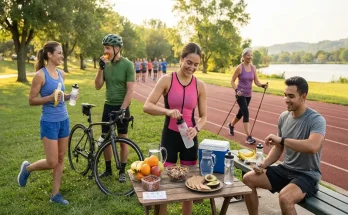
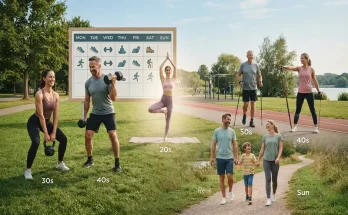
- The Cross-Training Protocol: Rotate your activities to prevent repetitive strain injuries (RSI). For example, pair two days of cycling with two days of swimming and one day of resistance training. This distributes mechanical loads across different muscle groups and joint angles.
- Prioritize Dynamic Mobility: Never skip your warm-up. Spend ten minutes moving your joints through their full active range of motion before engaging in your primary sport. This primes your nervous system and lubricates your joints for safe performance.
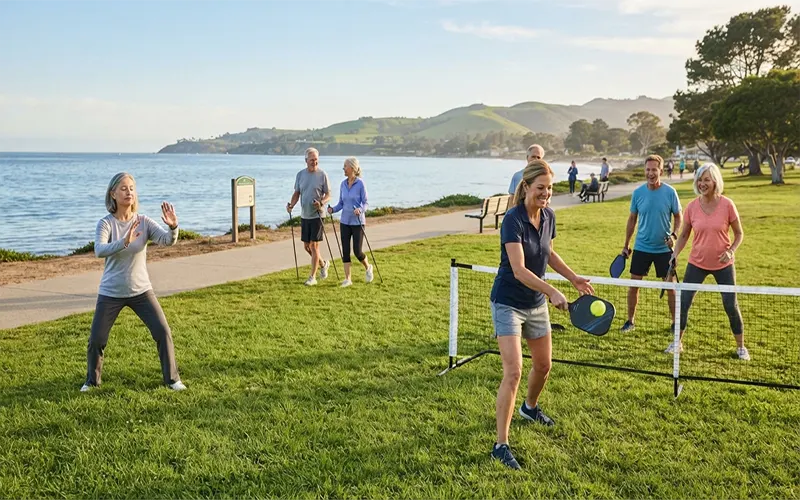
The truest measure of athletic intelligence is longevity. The best athlete is not necessarily the one who sprints the fastest today, but the one who is still swimming, cycling, rowing, and moving with strength and vitality decades from now. Choose your sports wisely, prioritize your structural health, and build a fitness lifestyle designed to last a lifetime.