
As we age, maintaining physical independence is deeply tied to two everyday superpowers: balance and mobility. Being able to step out of a car, navigate uneven pavement, or reach for an item on a high shelf with total confidence relies on a complex network of muscles, joints, and neural pathways.
Unfortunately, fear of falling often leads to a sedentary cycle that weakens the very stabilizing muscles needed to stay upright. Traditional balance exercises can sometimes feel like a clinical chore. However, there is a much more joyful, highly effective alternative: recreational sports. Engaging in active play challenges your body in dynamic ways, transforming fall prevention sports for seniors from a medical prescription into an exciting weekly hobby.
The Science of Balance and Proprioception in Aging
To understand why sports are so effective for stability, you must look at how the body stays upright. Balance is not maintained by muscle strength alone; it is a collaborative effort between three primary systems:
- The Vestibular System: The inner-ear sensors that track spatial orientation.
- Vision: Visual cues that help your brain map your position relative to your surroundings.
- Proprioception: The nervous system’s ability to sense where your joints and limbs are in space.
As we age, these systems can experience natural declines. Recreational sports actively stimulate proprioception by forcing your body to adapt to shifting surfaces, changing directions, and reacting to objects in motion, thereby keeping your neural pathways sharp and responsive.
Top Recreational Sports for Balance and Mobility
You do not need to subject yourself to jarring, high-impact activities to improve your stability. Several standout recreational sports for balance offer incredible mobility benefits while keeping your joints safe.
1. Tai Chi and Qigong: The Art of Weight-Shifting
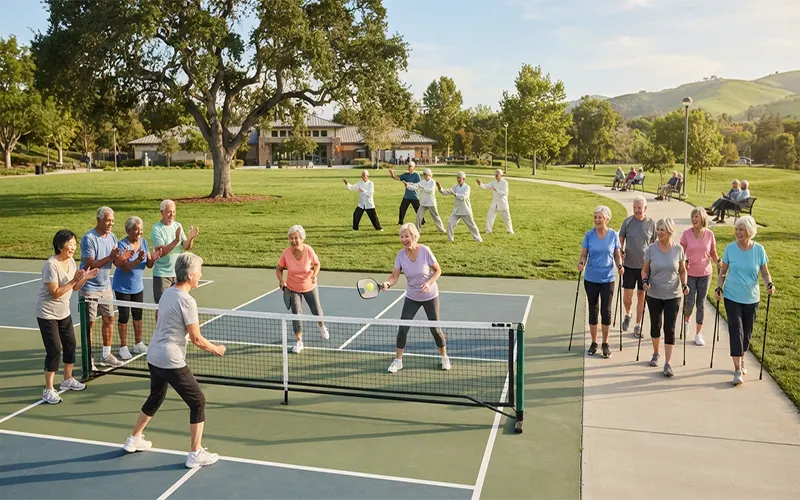
Often praised as the gold standard for fall prevention, Tai Chi is a traditional martial art practiced through slow, continuous, and deliberate movements.
- Why It Works: Tai Chi forces continuous weight transference from one leg to the other while maintaining a low center of gravity. This builds immense ankle strength, core stability, and lower-body control, making it one of the most powerful low-impact stability activities available.
2. Pickleball: Agility and Quick Reactions
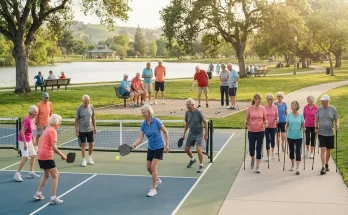
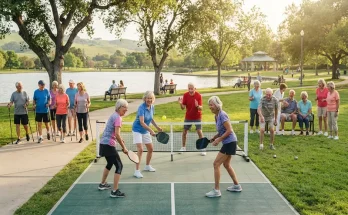
Pickleball has become a favorite among active older adults, and its benefits extend far beyond socialization.
- Why It Works: The game requires short bursts of lateral movement, quick directional changes, and precise hand-eye coordination. Reaching for a dink shot across the net gently challenges your dynamic balance and trains your reflexes to catch yourself if you ever stumble.
3. Bocce Ball and Lawn Bowling: Unilateral Stability
For those seeking a more relaxed pace, precision target sports like bocce ball and lawn bowling are exceptional choices.
- Why It Works: Delivering a bocce ball requires a controlled, single-leg weight shift, a gentle bend at the hip, and a smooth arm extension. This engages your deep core stabilizers and improves unilateral balance without the pressure of rapid movement.
4. Aquatic Exercise and Water Volleyball
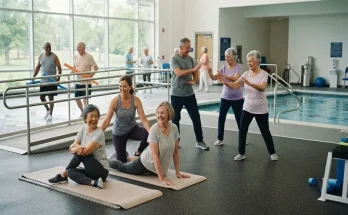
Water is a uniquely forgiving environment for rebuilding confidence in movement.
- Why It Works: Water volleyball provides multi-directional challenges—lunging, reaching, and tracking a ball—while the buoyancy of water supports your body weight. If you lose your balance in the pool, there is zero risk of a hard fall, allowing you to push your stability limits safely.
5. Senior Golf: Terrain and Rotation
Golf is a lifelong sport that naturally integrates balance into every single swing.
- Why It Works: Walking the course (or navigating a cart) exposes you to uneven grassy terrain, which forces your stabilizing ankle muscles to fire constantly. Furthermore, the rotational golf swing requires single-leg balance and core integration as your weight transfers from your back foot to your front foot.
Creating a Safe Playing Environment
To reap the maximum benefits of improving balance in older adults through sports, safety and consistency must go hand in hand:
- Invest in Proper Footwear: Wear supportive, non-slip court shoes or athletic sneakers designed for the specific terrain of your chosen activity.
- Progress Gradually: If you are new to a sport like pickleball or golf, start with beginner clinics or shorter sessions to let your stabilizing muscles adapt without overexertion.
- Leverage Community Centers: Local YMCAs, senior centers, and parks departments frequently offer instructor-led programs tailored specifically for older adults, ensuring a safe and supportive environment.
Balance and mobility are not fixed traits; they are dynamic skills that can be trained and improved at any stage of life. By stepping away from the stationary treadmill and embracing elderly mobility exercises wrapped in the fun of recreational sports, you protect your independence, sharpen your reflexes, and rediscover the joy of confident, active movement.