
In an era where hybrid work models, virtual check-ins, and digital communication dominate daily operations, maintaining a vibrant, connected company culture requires intentional effort. Traditional office parties and virtual happy hours have their place, but they often fail to spark genuine human connection or break down entrenched department silos.
Enter the corporate sports day. Organizing a well-planned athletic event provides a powerful catalyst for boosting employee morale, encouraging cross-department collaboration, and fostering genuine company pride. When colleagues step away from their desks and share a field, court, or lawn game together, professional hierarchies soften, and authentic team chemistry takes root.
Phase 1: Setting Objectives and Designing the Blueprint
Before booking a venue or buying custom t-shirts, you must establish clear strategic goals for your corporate sports day planning.
Defining Your Core Goals
Ask yourself what you want this event to achieve. Are you looking to spark playful cross-departmental mixing, reward your staff for a successful quarter, or place a major emphasis on employee wellness events and physical health? Knowing your primary driver will dictate the tone and scale of the day.
Gauging Interest and Budgeting
Send out a brief, early-stage survey to gauge employee interest, dietary restrictions, and comfort levels regarding physical activity. Concurrently, build a comprehensive budget covering venue rentals, equipment, catering, safety personnel, and promotional prizes.
Phase 2: Venue Selection and Inclusive Activity Design
The success of your event hinges on picking the right location and designing activities that accommodate everyone on your roster.
Finding the Ideal Venue
Look for a location that offers both indoor and outdoor options, or a sprawling multi-sport complex. Public parks with pavilions, local university recreation centers, or private sports clubs often provide the best infrastructure, offering ample parking, restrooms, shade, and easy accessibility for all employees.
Balancing Competition and Inclusivity
Traditional track-and-field days centered entirely around high-intensity running often alienate employees who aren’t avid athletes. To achieve successful corporate sports tournament organization, design multi-tiered activities where everyone can contribute.
Engaging Activity Ideas
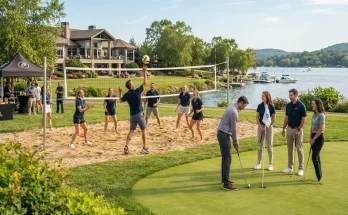
- Low-Barrier and Social Sports: Incorporate crowd-pleasers like pickleball, bocce ball, or cornhole tournaments. These games require minimal athletic background and allow for continuous conversation.
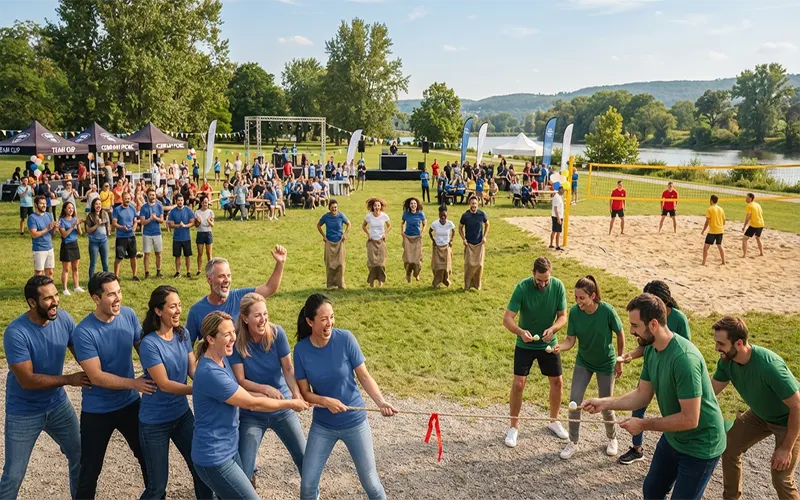
- Collaborative Team Challenges: Feature novel group events like relay races, giant scavenger hunts, or collaborative obstacle courses. These require communication and collective strategy rather than raw speed, ensuring every fitness level shines.
Phase 3: Logistics, Safety, and Day-of Execution
Execution details make the difference between a chaotic afternoon and a seamless, unforgettable company tradition.
- Teams and Scoring: Mix departments strategically. Instead of letting engineering play sales, draft randomized teams that force employees to collaborate with colleagues they rarely see during normal workdays. Keep scoring lighthearted—use a visible leaderboard that tracks participation points alongside athletic victories.
- Hydration, Nutrition, and Comfort: Physical activity under the sun requires rigorous preparation. Set up dedicated hydration stations with water and electrolyte drinks. Partner with local food trucks or caterers to provide nourishing, accessible meals and healthy snacks throughout the day.
- Safety and Weather Contingencies: Always have a first-aid station and a designated medical point of contact. Furthermore, establish a clear rain date or indoor backup plan so unpredictable weather doesn’t derail months of planning.
Phase 4: Post-Event Engagement and Measurement
The momentum of a corporate sports day shouldn’t end when employees pack up their gear and head home.
- Celebrate Wins and Contributions: Host a brief awards ceremony at the end of the day. Give out playful trophies—not just for first place, but for best sportsmanship, most enthusiastic team spirit, or best team name. Alternatively, donate a cash prize to a charity of the winning team’s choice to amplify community impact.
- Gather Feedback: Send out a post-event survey within 48 hours to capture feedback. Understanding what worked and what could be improved will make your next outing even better.
- Sustain the Morale: Share photo galleries and video highlights on your internal communication channels (like Slack or Microsoft Teams) to keep the positive energy alive back at the office.
Organizing a corporate sports day is far more than a simple break from routine work—it is an investment in human capital and workplace happiness. By focusing on inclusivity, thoughtful logistics, and shared fun, you can transform a group of isolated colleagues into a cohesive, energized, and deeply connected community.