
For generations, cultural narratives around aging suggested a quiet retreat from physical exertion. Society often whispered that once you crossed a certain threshold, high-energy movement, sports, and athletic competition should be replaced by sedentary hobbies.
Fortunately, modern sports science and geriatric physical therapy have shattered that outdated myth. Staying active in later life is no longer about sitting on a stationary exercise bike facing a blank wall; it is about play, community, and joyful movement. For older adults looking to maintain peak vitality without wrecking their joints, low-impact sports for seniors offer the ultimate blueprint for active aging.
The Science of Low-Impact Training for Joint Preservation
As we age, the cartilage that cushions our joints naturally experiences cumulative wear and tear. High-impact sports—such as running on hard pavement or jumping sports that subject knees and hips to severe shock waves—can accelerate this breakdown, leading to inflammation, pain, and forced inactivity.
Gentle Mechanical Loading
Low-impact sports protect your skeletal structure while still providing the physical stress necessary to stimulate bone mineral density. By eliminating jarring impacts, these activities allow older adults to build muscular armor around their joints, enhance proprioception (spatial awareness), and boost cardiovascular health without risking micro-trauma.
The Best Low-Impact Sports for Active Older Adults
You do not need to subject your body to punishing impact forces to reap the rewards of athletic competition and fitness. Several standout senior-friendly athletic sports combine excitement, community, and joint safety.
1. Pickleball: Agility and Social Joy
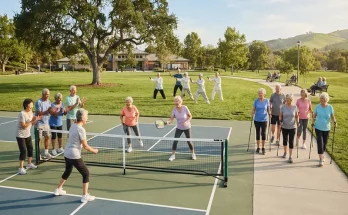
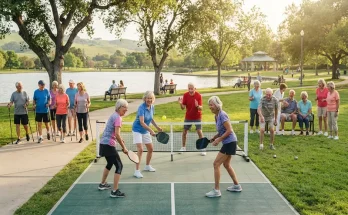
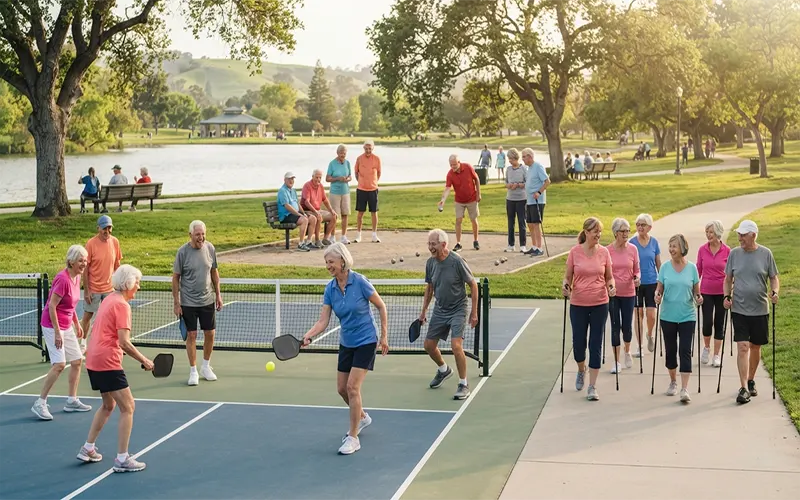
Pickleball has taken the world by storm, and for good reason. Played on a badminton-sized court with a lightweight paddle and a perforated ball, it delivers an incredible workout for hand-eye coordination, quick thinking, and lateral agility. Because the court is compact, players do not have to cover vast amounts of ground, making it an exceptional joint-safe workout for older adults.
2. Swimming and Aquatic Fitness
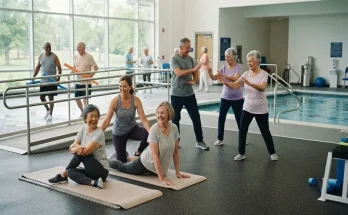
Water is a magical medium for the aging body. Swimming laps or joining water aerobics classes provides total-body resistance training and vigorous cardiovascular conditioning while supporting up to 90% of your body weight. The buoyancy of water eliminates gravity’s downward pressure on the spine and hips, allowing individuals with severe arthritis to move freely and powerfully.
3. Cycling and E-Biking
Whether hitting paved community trails on a traditional touring bicycle or utilizing a pedal-assist e-bike to conquer steep hills, cycling is a phenomenal way to build robust leg strength and aerobic stamina. Cycling is entirely non-weight-bearing on the lower limbs, sparing the knees and ankles from shock while delivering an invigorating outdoor adventure.
4. Indoor Rowing and Crew
Rowing machines (ergometers) provide one of the most efficient, full-body workouts in existence. The rowing stroke engages 86% of your body’s muscles, building strength across your legs, core, and back in a smooth, continuous kinetic chain. Best of all, it is performed in a seated position, completely removing impact stress from the joints.
5. Tai Chi: The Meditative Sport
Often described as “meditation in motion,” Tai Chi is a traditional martial art practiced slowly and deliberately. It focuses on weight shifting, deep breathing, and fluid transition between postures. Clinical studies consistently rank Tai Chi as one of the single most effective active aging fitness activities for preventing dangerous falls by dramatically improving balance and core stability.
How to Start Safely and Build Consistency
Transitioning into a new sport should be an exciting adventure, not a source of stress. Follow these foundational rules to protect your body and maximize your enjoyment:
- Never Skip the Warm-Up: Spend five to ten minutes gently mobilizing your joints, warming up your muscles, and elevating your heart rate before jumping into dynamic movement.
- Listen to Structural Feedback: Mild muscle fatigue is a normal sign of strengthening; sharp joint pain is a warning sign to stop, pivot, and rest.
- Seek Out Beginner Clinics: Look for local community centers, senior YMCAs, or clubs that offer introductory lessons tailored for older adults. Learning proper technique early prevents injuries and accelerates confidence.
Play, competition, and physical vitality have no expiration date. Embracing best low-impact exercises and sports allows you to protect your joints, strengthen your heart, and rediscover the sheer joy of movement. Step onto the court, dip into the pool, or grab a paddle—your healthiest, most vibrant chapters are waiting.