
For generations, the conventional advice given to individuals experiencing arthritis or chronic joint discomfort was simple: rest, avoid activity, and protect the affected joints. Today, medical science and physical therapy have completely rewritten that script. We now know that complete inactivity is one of the worst things you can do for stiff joints.
The mantra among movement specialists is simple: “motion is lotion.” Controlled physical activity stimulates the production of synovial fluid, which naturally lubricates and nourishes your joints. Of course, safety and joint protection are paramount.
The Physiology of Joint-Friendly Exercise
Understanding how your joints respond to movement helps demystify why staying active is so transformative. Cartilage does not have its own direct blood supply; instead, it relies on movement to absorb nutrients and eliminate waste products, much like a sponge soaking up and releasing water.
Lubrication and Muscle Support
When you engage in gentle, low-impact exercise, your body increases the circulation of synovial fluid. Furthermore, strengthening the muscles, tendons, and ligaments that surround a compromised joint acts like a natural internal brace. Stronger supporting muscles absorb the mechanical shocks of daily life, taking immense pressure off the joint surfaces themselves.
Top Recommended Sports and Activities
Choosing the right activity allows you to build strength, maintain cardiovascular health, and improve flexibility without triggering painful inflammation.
1. Water-Based Exercises and Hydrotherapy
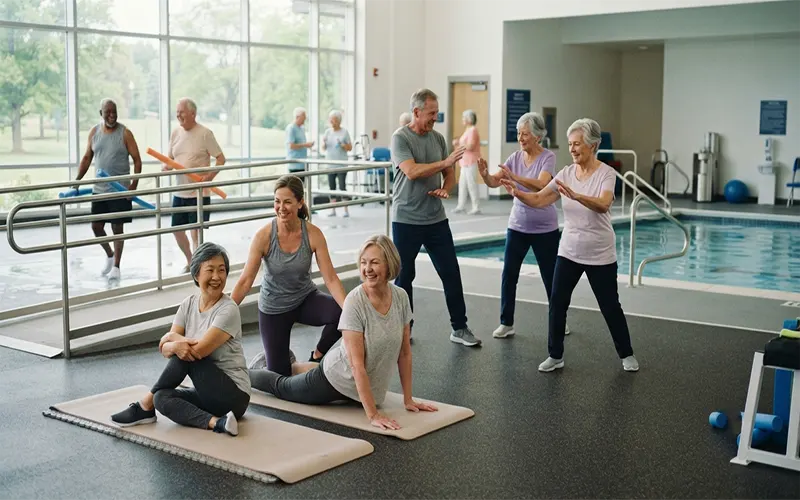
Water is widely considered the gold standard for arthritis-friendly exercise. Whether you are swimming, water walking, or participating in a gentle aqua-aerobics class, the physics of water work in your favor. Buoyancy supports up to ninety percent of your body weight when immersed to the chest, instantly eliminating the heavy gravitational load on your knees, hips, and spine while providing natural resistance for muscle toning.
2. Tai Chi and Mindful Movement
Often described as “meditation in motion,” Tai Chi and Qigong are exceptional for older adults. These ancient Chinese practices involve slow, continuous, fluid movements paired with deep breathing. They require zero jumping or jarring motions while actively building lower-body strength, improving balance, and expanding your range of motion—making them powerful tools for both joint management and fall prevention.
3. Recumbent and Stationary Cycling
Cycling is a fantastic way to maintain cardiovascular endurance without the pounding impact forces associated with walking on hard concrete or running. For older adults with back or hip issues, a recumbent stationary bike (where you sit back in a supportive bucket seat with your legs out in front of you) offers maximum spinal support while keeping knees moving through a smooth, controlled circular range of motion.
4. Chair Yoga and Gentle Stretching
Stiff joints crave flexibility, but traditional floor-based yoga can be difficult to get into and out of for individuals with severe arthritis. Chair yoga modifies classic poses by using a sturdy chair for seated or standing support. It focuses on gentle stretching, joint mobilization, and breath-work, easing stiffness in the shoulders, wrists, hips, and spine safely.
5. Walking on Soft Surfaces with Trekking Poles
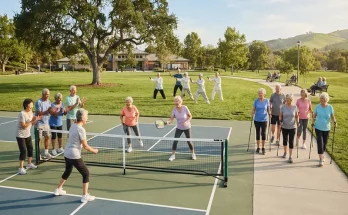
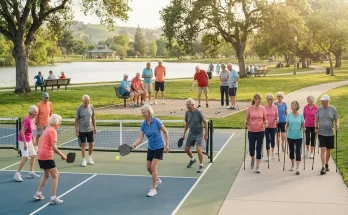
Walking remains a wonderful, functional activity, provided you modify the environment and technique. Skip hard asphalt and choose flat, shock-absorbing dirt paths, indoor walking tracks, or rubberized community trails. Utilizing trekking poles or walking sticks distributes your body weight across your upper body, reducing the load on your lower limbs by up to twenty percent while dramatically improving stability.
Crucial Safety Protocols for Joint Care
Participating in low-impact sports for seniors requires listening closely to your body and respecting its signals.
- Prioritize Warm-Ups: Never jump straight into an activity with cold, stiff joints. Spend five to ten minutes doing gentle range-of-motion movements—like ankle rolls, wrist circles, and slow arm swings—to prepare your body.
- Know the Difference in Pain: It is vital to distinguish between normal muscle fatigue (which feels like a dull ache or tiredness after a workout) and joint pain (which manifests as sharp pain, grinding, swelling, or lingering inflammation that lasts for hours after stopping). If you experience joint pain, stop immediately.
- Invest in Supportive Gear: Wear properly cushioned, supportive footwear designed for stability. If recommended by your physical therapist, utilize lightweight joint sleeves or braces for added confidence and security during activity.
Living with arthritis or joint pain does not mean your active years are behind you. By choosing the right low-impact sports, honoring your body’s limits, and focusing on consistency over intensity, you can protect your mobility, reduce chronic stiffness, and preserve your independence for years to come.