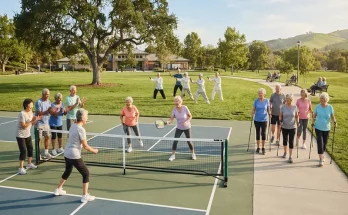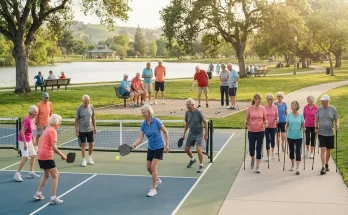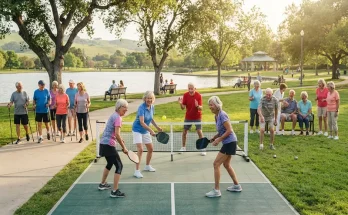

Maintaining physical activity is essential for healthy aging, yet seniors with limited mobility in the upper body—due to conditions like arthritis, stroke, or Parkinson’s disease—often find traditional sports and exercise challenging. The solution lies in adaptive sports equipment, which revolutionizes physical engagement by minimizing strain, maximizing stability, and re-engineering how activities are performed. This specialized gear ensures that limitations become minor adjustments, not roadblocks to an active lifestyle.
Redefining Grip and Control 🖐️
The inability to firmly grip or manipulate equipment is a major barrier. Adaptive solutions focus on simplifying the hand-object interface.
- Universal Cuff and Gripping Aids: For seniors with very limited hand function or grip strength, universal cuffs and specialized gripping aids (such as those made of neoprene or leather) can secure a person’s hand to equipment like golf clubs, dumbbells, or resistance bands. This allows the forearm and shoulder muscles to power the activity, bypassing the need for finger dexterity.
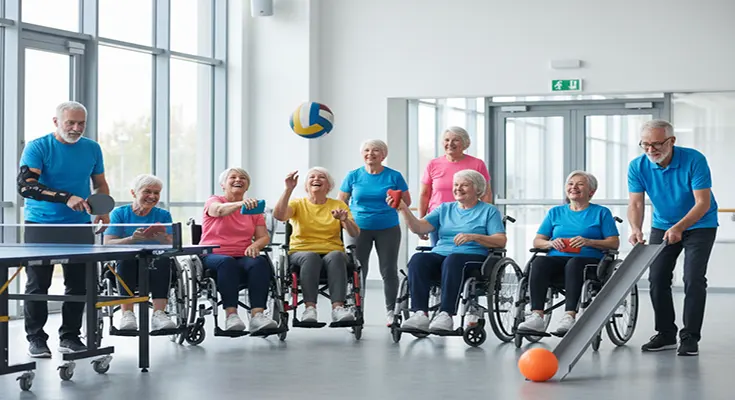
- Velcro and Strap Systems: Simple, wide Velcro straps can replace complex closures, securing a hand to a racquet handle or a fishing rod. This is particularly useful in seated sports like table tennis or seated volleyball, where a firm, continuous grip is not always possible.
- Ergonomic and Weighted Handles: Equipment can be modified with oversized, custom-molded, or weighted handles that require less forceful gripping. For instance, modified paddles for kayaking or canoeing allow a user to use their entire forearm against the handle for leverage.
Minimizing Effort, Maximizing Output ⚙️
Adaptive technology in sports often involves mechanical assistance to compensate for reduced strength and range of motion.
- Ramps and Pushers for Bowling and Bocce: For those whose upper body limitations prevent throwing a ball, a ramped delivery system allows them to push the ball down an incline with minimal force. This transforms bowling or bocce ball into a strategic game rather than a strength test.
- Upper Body Ergometers (Arm Bikes): These devices are essentially stationary bikes for the arms, allowing a seated user to engage in cardiovascular exercise and build upper body strength by cycling their arms. Many models can be adjusted for passive (motorized assistance) or active (user-powered) movement.
- Adaptive Cycling (Handcycles): For seniors with strong core and upper body capability, handcycles allow them to use their arms to pedal, enabling them to enjoy cycling for long distances.
The Holistic Benefits of Adapted Play 🧠
The benefits of using this equipment extend well beyond the physical realm.
- Increased Independence: The ability to participate in a beloved sport or begin a new one boosts self-esteem and maintains a sense of autonomy.
- Social Engagement: Adaptive sports clubs create inclusive environments, combating the social isolation often associated with limited mobility.
- Functional Strength: Even low-resistance exercise helps maintain the shoulder, back, and arm strength necessary for essential daily activities, such as transferring from a chair or operating a wheelchair.
By embracing and utilizing adaptive sports equipment, seniors with limited upper body mobility can confidently re-enter the world of physical activity, promoting lifelong health, social connection, and renewed purpose.